Featured
Table of Contents
- – The Brainless CMS Transformation Nobody Talks ...
- – What AI-Powered Actually Means (Versus Advert...
- – E-Commerce Past Shopify Templates
- – Lead Generation Sites That Do Not Suck
- – Why Agencies Avoid Complicated Constructs
- – The Build vs. Buy Computation
- – What Good Development Agencies Really Supply
- – The AI Growth Understanding Curve
- – Making the Right Company Selection
I've been taking a look at web advancement firms for the past month, and honestly, most of them are stuck. They're still pitching WordPress with an exceptional motif, possibly some personalized CSS if you're lucky, and calling it "" customized development."" Your competitors are delivering sites with AI chat interfaces, vibrant web content generation, and headless CMS designs that actually range.
The gap in between what's possible and what a lot of agencies provide has actually never been wider. AI-powered advancement isn't nearly slapping ChatGPT onto your contact page. It's basically altering exactly how sites obtain constructed, exactly how material obtains taken care of, and what "" customized"" actually means in 2025.
The Brainless CMS Transformation Nobody Talks About
Typical WordPress or Squarespace arrangements make sense for basic brochure websites. However the minute you require anything sophisticated-- multi-channel material distribution, customized user control panels, real-time information combinations-- you struck a wall surface fast.
Strapi and comparable headless CMS systems changed the video game. Your web content stays in one area, obtainable through API, and your frontend can be anything: a React application, a mobile interface, numerous advertising and marketing sites pulling from the exact same content swimming pool. You're not secured into whatever templating system your CMS forces on you.
The firms in fact doing this ideal develop the backend and frontend as separate concerns. Content editors get clean, structured interfaces for handling every little thing. Developers get full freedom to build whatever individual experience makes feeling. Marketing teams can press material to internet, mobile, email projects, and third-party systems from one resource of fact.
Most agencies don't pitch this because it's harder to sell. Customers listen to "" brainless CMS"" and their eyes glaze over. They wish to see quite mockups, not discussions regarding API designs and content modeling. Agencies maintain developing monolithic WordPress sites that'll require total rebuilds in 3 years.
What AI-Powered Actually Means (Versus Advertising Fluff)
Every company currently claims to construct "" AI-powered web sites."" A lot of them imply they integrated an OpenAI API phone call to a chatbot widget. That's fine, yet it's not what makes a site in fact intelligent.
Real AI assimilation suggests dynamic web content generation based on user habits, individualized UX that adapts to various visitor sectors, automated lead qualification that routes queries intelligently, and natural language user interfaces for complex searches or filtering. It indicates the site gets smarter gradually instead of being a fixed brochure.
I have actually seen shopping sites that utilize AI to create product summaries, optimize pricing dynamically, and develop tailored bundle suggestions that actually transform. List building websites that certify leads via conversational interfaces and course them to the best sales rep automatically. Material sites that adapt their navigating and referrals based on exactly how users actually surf, not how the developer presumed they would certainly.
The technical application issues. Are you just calling APIs and hoping they stay available and affordable? Or are you building systems that can switch models, tweak on your information, and degrade with dignity when solutions are down? The majority of firms do the previous due to the fact that it's much easier.
E-Commerce Past Shopify Templates
Shopify functions excellent for simple retail. Yet intricate B2B ecommerce, registration versions with custom-made billing reasoning, multi-vendor markets, or inventory systems that sync with real storehouse management-- that's where you need actual customized development.
The companies crushing it in this space develop on platforms like Strapi or personalized Node.js backends, incorporate with whatever payment processor makes sense for your service design (not simply Red stripe), and create admin user interfaces that match your actual process rather than compeling you right into Shopify's assumptions about how business works.
Custom-made ecommerce growth costs extra ahead of time. Clearly. If you're doing $2M+ in annual income and Shopify's restrictions are costing you 15% in conversion price or functional performance, the ROI math shifts quick. Shopify's 2.9% + 30 cents per deal also builds up-- custom repayment assimilation can cut that dramatically at scale.
The real worth turns up in features Shopify can not do: complex B2B rates with customer-specific magazines, quote-to-order operations, combination with legacy ERP systems, customized delivery estimations based upon real-time warehouse information. You need programmers that recognize both ecommerce and your certain organization reasoning.
Lead Generation Sites That Do Not Suck
A lot of lead generation sites adhere to the exact same worn out playbook: hero section with vague worth prop, 3 benefits with stock icons, contact type that asks for also much info, perhaps a prices table. Conversion prices hover around 2% and everyone shrugs like that's regular.
Much better companies build lead gen websites as real funnels. Different landing pages for various website traffic sources and intent levels. Dynamic profiling that does not ask for every little thing upfront. Conversational interfaces that qualify leads before sending them to sales. Real-time combination with your CRM so leads do not sit in a spreadsheet for 2 days.
AI changes lead generation essentially. Instead of fixed types, you can have smart discussions that adjust based upon feedbacks. Rather than sending out every questions to the exact same inbox, you can route qualified leads immediately. Rather of one-size-fits-all landing web pages, you can generate personalized web content based upon referral source, market, or firm size.
The technical stack matters right here too. Sites built on modern JavaScript frameworks pack quicker, feel even more responsive, and can do client-side recognition and vibrant content without web page reloads. Users anticipate app-like experiences now, not confusing form entries with complete page refreshes.
Why Agencies Avoid Complicated Constructs
Right here's the uncomfortable reality: the majority of internet advancement firms avoid advanced jobs since they're more challenging to scope, harder to deliver effectively, and call for better designers who set you back more.
Developing a custom-made Strapi backend with AI integrations and intricate company logic takes elderly designers. You can't offshore it to junior devs adhering to tutorials. You require individuals who recognize data modeling, API design, verification systems, and just how to build something that will not crumble when website traffic ranges.
Agencies maximized for quantity prefer to crank out 10 $15k WordPress sites than one $150k customized build. The margins look much better, the timelines are predictable, and they can make use of cheaper resources. If you require something advanced, you're losing time and money attempting to force it right into their template-based process.
The Build vs. Buy Computation
For simple needs, SaaS systems make complete sense. Don't build a custom-made blog site when Ghost or WordPress does it great. Don't build custom-made ecommerce when Shopify helps your design. Do not build a custom CRM when HubSpot or Salesforce exists.
The minute you need something certain to your business model, the calculation flips. Paying $500/month for a SaaS that does 70% of what you need, then investing another $2k/month on workarounds and assimilations-- that's often much more expensive long-term than developing precisely what you need when.
Customized development makes good sense when your organization has one-of-a-kind process that are competitive benefits, when combination needs are complex sufficient that middleware costs build up, when you're scaling quick and SaaS rates ends up being excruciating, or when you require to own your data and framework entirely.
What Good Development Agencies Really Supply
The agencies doing this right do not simply create code. They start with discovery to comprehend your real company problems, not just what you assume you need technically. They record whatever appropriately so you're not secured in permanently. They construct with modern-day stacks that other developers can preserve. They established up hosting settings and implementation pipelines so updates do not break manufacturing.
They're likewise straightforward about timelines. Custom-made development takes longer than templated builds. An advanced e-commerce system could be 3-6 months, not 6 weeks. AI integrations require time for testing and refinement. Any individual encouraging facility integrates in impractical timeframes is either lying or planning to supply waste.
Great agencies also prepare for upkeep from day one. Customized websites require updates, safety and security patches, dependency upgrades, and occasional attribute enhancements. They established up monitoring, mistake tracking, and back-up systems. They document their code so your next programmer doesn't have to reverse-engineer everything.
The AI Growth Understanding Curve
Structure AI-powered websites in 2025 needs continuously learning new devices and techniques. Versions improve every few months. New APIs launch. Best techniques advance. Agencies that got comfy with their tech pile in 2020 are currently behind.
This appears in proposition information. Are they speaking about particular versions and utilize situations, or simply vague guarantees regarding "" AI integration""? Do they understand token limitations, latency factors to consider, and cost monitoring? Have they constructed this previously, or are they preparing to figure it out on your penny?
The most effective agencies deal with AI as facilities, not features. They construct systems where you can exchange models, adjust criteria, and repeat on prompts without code adjustments. They prepare for scenarios where APIs are slow-moving or inaccessible. They consider costs at scale, not simply the demo.
Making the Right Company Selection
Picking an internet advancement firm isn't regarding finding the cheapest alternative or the one with the most beautiful portfolio. It has to do with discovering people who have actually constructed what you're attempting to construct, comprehend your technical requirements deeply, and can supply something that ranges with your organization.
Ask about their technology pile and why they picked it. Ask to talk to previous customers with similar intricacy. Ask exactly how they handle recurring upkeep and updates. Ask about their growth process, screening method, and how they manage extent changes.
The firms worth working with will ask you awkward inquiries about your business design, user workflows, and technical restrictions before suggesting options. They'll push back on poor ideas and recommend options. They'll be truthful about what's tough and what's impossible.
If a company guarantees every little thing is easy and fast, run. Custom growth is neither. Done right, with people who recognize what they're doing, it's the difference in between an internet site that's a cost center and one that's actually a growth engine.
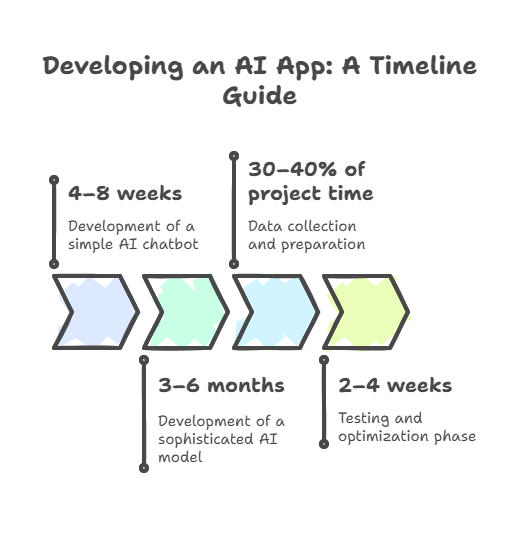

Table of Contents
- – The Brainless CMS Transformation Nobody Talks ...
- – What AI-Powered Actually Means (Versus Advert...
- – E-Commerce Past Shopify Templates
- – Lead Generation Sites That Do Not Suck
- – Why Agencies Avoid Complicated Constructs
- – The Build vs. Buy Computation
- – What Good Development Agencies Really Supply
- – The AI Growth Understanding Curve
- – Making the Right Company Selection
Latest Posts
Search Engine Ranking Standards for Mental Health Dent repair
Year-Round vs Fluctuating Body shop Approach for Mental Health Professionals
When Adaptive Strategy Drives Success Rates
More
Latest Posts
Search Engine Ranking Standards for Mental Health Dent repair
Year-Round vs Fluctuating Body shop Approach for Mental Health Professionals
When Adaptive Strategy Drives Success Rates